
Sex Offender Checks in Hays County
The Texas Public Sex Offender Registry is the authoritative statewide starting point. Texas DPS publishes records that Chapter 62 makes public and lets a reader narrow a name or place search to Hays County. The registry reaches across San Marcos, Kyle, Buda, and the county's unincorporated areas, but local police and the Hays County Sheriff's Office perform registration and verification work. Use the public profile for awareness, then contact the correct local authority when a current location or compliance concern needs confirmation.
A Hays County registry result answers a narrow question. It identifies people who now have a reportable registration duty. It does not list every arrest, charge, or conviction in Hays County, and a court may limit public access to a juvenile registration record. The broader county record path uses court clerks, arresting agencies, and DPS criminal-history channels. Treat the registry as a public-safety notice rather than a substitute for those sources.
The DPS search screen shown here is the source of the Hays County sex offender search controls.
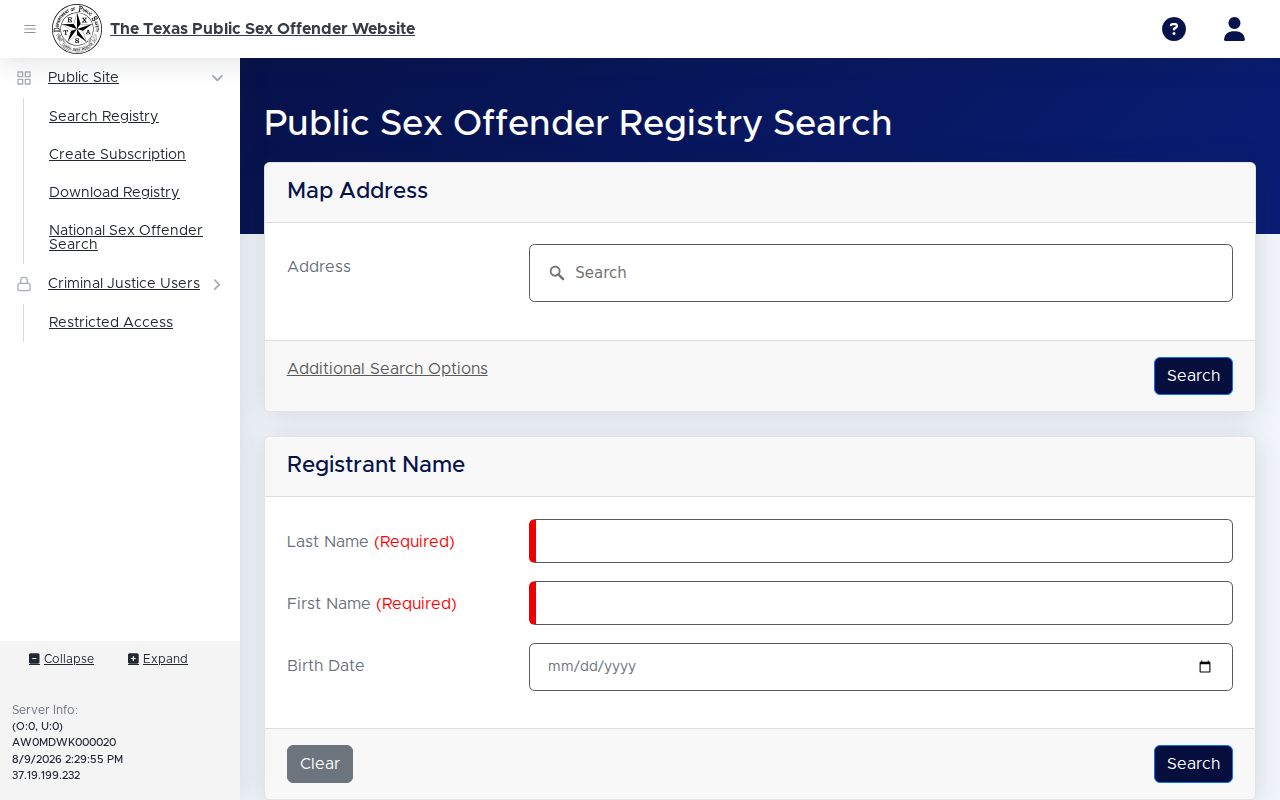
The screen directs a searcher to the state system that holds the public Hays County registry entries.
How to Search the Texas Public Sex Offender Registry
For a Hays County search, start with the state portal and use the least broad set of facts that can still identify the right location or person. A Hays County filter is useful for countywide awareness. A city, ZIP code, or valid street address can focus a place search. Name spelling and aliases matter when checking a specific profile. DPS also exposes an institute-of-higher-education mode for campus-related searches. The map or radius control may change as the portal changes, so no unverified distance should be assumed.
- Open the Texas DPS registry and read its conditions of use before searching.
- Enter a name, a valid address, a city or ZIP code, or choose Hays from the county filter.
- Compare aliases, age, physical details, and location data so a similar name is not mistaken for the right profile.
- Open the full entry and check the offense, registration status, address information, and local registering authority.
| Field or Mode | Type | Required | Use |
|---|---|---|---|
| Last and first name | Text | Portal-dependent | Searches names and aliases |
| Address | Text | Portal-dependent | Needs a valid street and city |
| City or county | Text or dropdown | Optional | Select Hays for countywide results |
| ZIP code | Text | Optional | Narrows a geographic search |
| Higher education | Search mode | Optional | Supports campus-related registry checks |
| Map or radius | Map control | Optional | Use the live portal's current settings |
Reset the form before switching from a name search to a place search. That keeps old filters from silently narrowing the Hays County results.
Hays County Registry and NSOPW
For Hays County, the DPS registry is best when the relevant location is local. The National Sex Offender Public Website, operated by the U.S. Department of Justice, adds a cross-state layer. It is useful when a person may have moved, a trip crosses a state line, or a safety check involves more than one jurisdiction. NSOPW routes searches across participating public registries, while the Texas page supplies the state-specific profile and registration context.
The official NSOPW search shown here illustrates the national route.
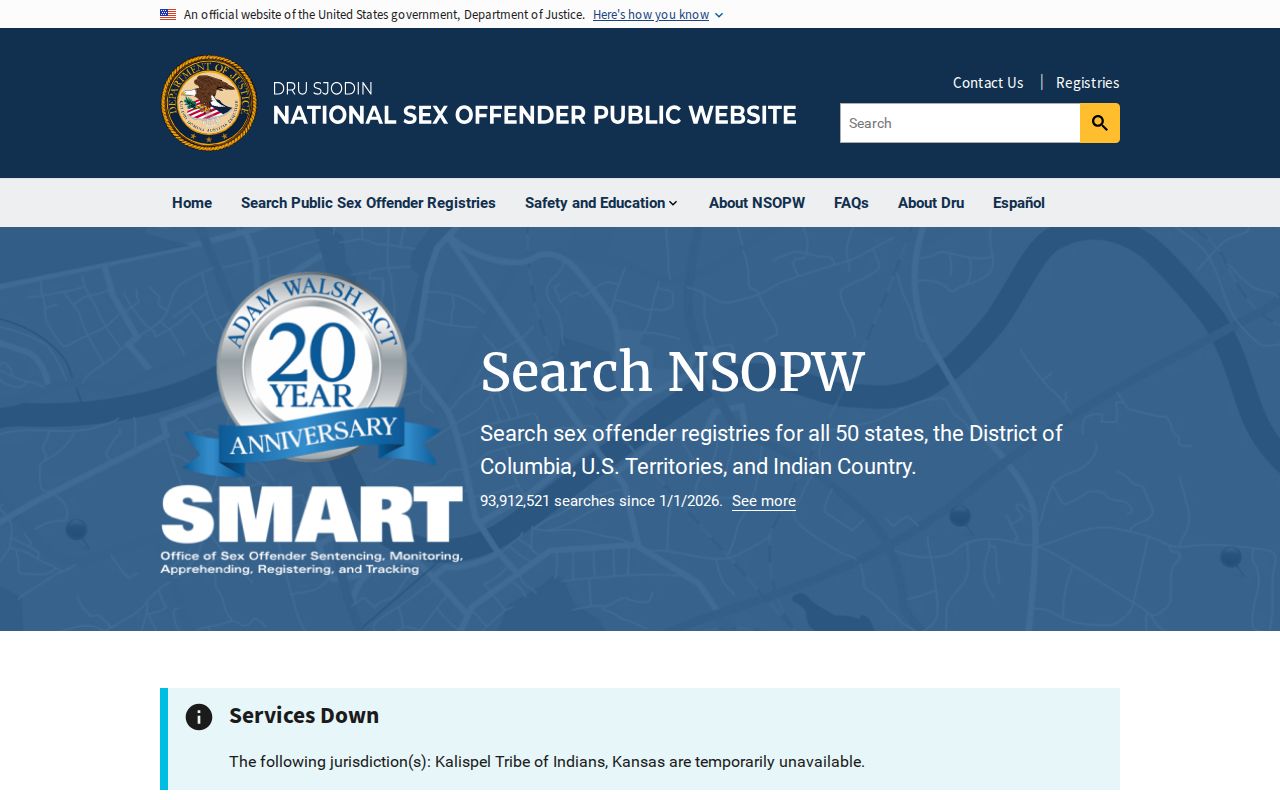
A national match should be followed back to the source jurisdiction. For a Texas entry, use the DPS profile and then the Hays County registration authority when local confirmation is needed.
Note: NSOPW expands geographic reach, but it does not turn a registry listing into a complete court or arrest history.
Inside a Registry Profile
A public Hays County profile combines identity clues, the reportable offense, and current registration data. Read the whole entry. A photo or name alone is not enough to distinguish people with similar details. A residence may appear as a street address or a geographic description when the statute permits that form. Vehicle data and scars, marks, or tattoos can add context. The profile may also state a numeric risk level and a compliance status, but those fields must be read under Texas law.
| Identity | Full name, aliases, date of birth or age, sex, race, height, weight, eyes, and hair |
|---|---|
| Photo and marks | Current public photo plus scars, marks, or tattoos when published |
| Residence | Address or a lawful geographic description |
| Reportable offense | Offense, statute, conviction or adjudication date, and release date |
| Registry status | Numeric risk level if assigned and registration or compliance status |
| Vehicle | Make, model, color, plate, and state when public |
| Not public | Victim identity, Social Security number, driver-license number, protected phones, and specified online identifiers |
Victim information is not published. Employer contact details and other protected identifiers also stay outside the public profile. Those limits protect private information without changing the public notice function.
Hays County Registry Risk Levels
On Hays County profiles, Texas risk levels are not federal SORNA tiers. A number on a Hays County registry profile does not, by itself, set how long registration lasts. Duration turns on the legal category in Article 62.101, the age and court path at adjudication, and the event that starts the statutory clock. Verification can occur every year or much more often for a narrow class. This is why a profile's offense and duty information matter more than an assumed tier label.
Key distinction: Texas assigns registration terms by state-law category. Do not convert a numeric risk level into a federal tier or a guessed end date.
When the stated status seems unclear, the local registration authority can confirm current compliance information. Court orders and DPS records control the legal duty.
Texas Registration Levels and Requirements
For Hays County registrants, Texas registration clocks range from ten years to life. The start point may be release, dismissal or discharge, completion of supervision, or a juvenile disposition. Verification is generally annual, but repeat sexually violent offenses can require a ninety-day schedule, and a civilly committed sexually violent predator reports every thirty days. An out-of-state, federal, foreign, or military duty can follow the period imposed by its source.
| Texas Category | General Duration | Verification |
|---|---|---|
| Adult lifetime category | Life | Usually annual; every 90 days for two or more sexually violent offenses |
| Other adult reportable adjudication | Until the tenth anniversary of the later qualifying event | Annual |
| Juvenile delinquent adjudication | Ten years after the later disposition or completion | Annual unless a court changes access or duty |
| Certified or transferred juvenile | Ten years after the later release, discharge, or dismissal | Annual |
| Civilly committed sexually violent predator | Life | Every 30 days |
| Extrajurisdictional registrant | Until the source duty expires | As Texas law directs |
A move has its own timeline. Texas generally requires an in-person report by the seventh day before a move, followed by registration with the new Texas authority by the seventh day after arrival. An out-of-state destination adds a ten-day duty. Failure to comply is a felony under Article 62.102.
Report Hays County Registry Concerns
Suspected Hays County registry noncompliance should go to the agency responsible for the address. The Hays County Sheriff's Office handles unincorporated areas. San Marcos Police, Kyle Police, or Buda Police handles a registrant within its city, subject to confirmation by that agency. Give the nonemergency office concrete facts, such as the profile name, listed location, and the reason the entry may be stale. Do not confront the person or try to enforce the statute yourself.
A profile may lag a recent move or may lawfully use a geographic description. That difference is why direct agency confirmation matters. For immediate threats or danger, call 911. Routine questions belong on a nonemergency line.
Hays County Registry Notifications
Texas law permits more than a web profile. DPS or a local authority may notify schools. For a risk-level-three notice, the local authority may use a newspaper or circular, a neighborhood meeting, postings, handbills, or a specialized site within statutory rules. These methods aim to help residents make sound safety plans. They do not invite claims beyond the official record.
The Hays County public registry should be checked again when time matters because status and location can change. Keep the profile's limits in view, especially where a court has restricted a juvenile record or where a residence appears as a geographic description.
Community Notification and Lawful Use
Texas Code of Criminal Procedure Chapter 62 governs registration, public notice, verification, and misuse consequences. Registry information is published for safety and community awareness. It should be used to understand an official notice, plan for family safety, and bring a well-founded concern to police. It should never become a tool for threats, harassment, vigilantism, or unlawful discrimination.
The Texas criminal-history dissemination law provides another part of the official legal context.
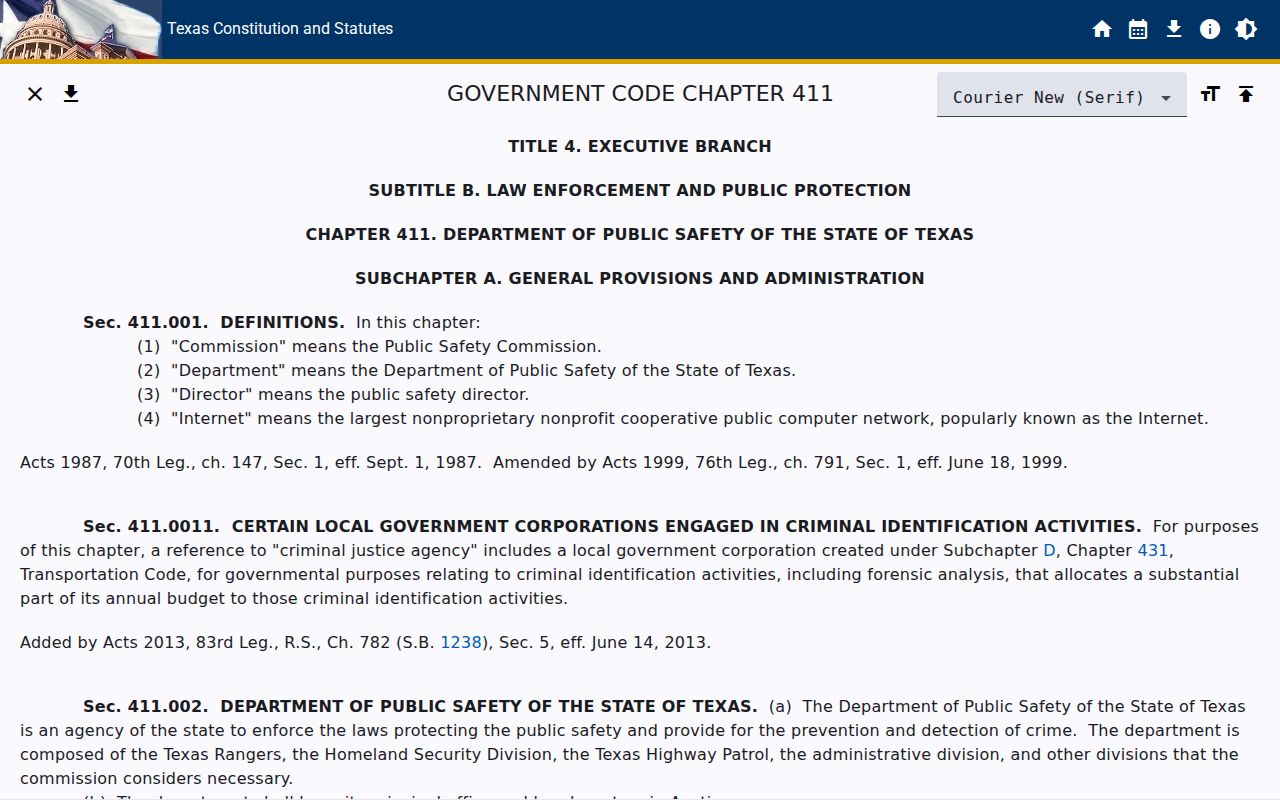
That official source reinforces that public criminal-history and registry data are released only within statutory bounds.
Registry misuse is a crime: Chapter 62 warns against using registry information to harass, threaten, or commit a crime. Never confront a registrant or misuse a Hays County profile.